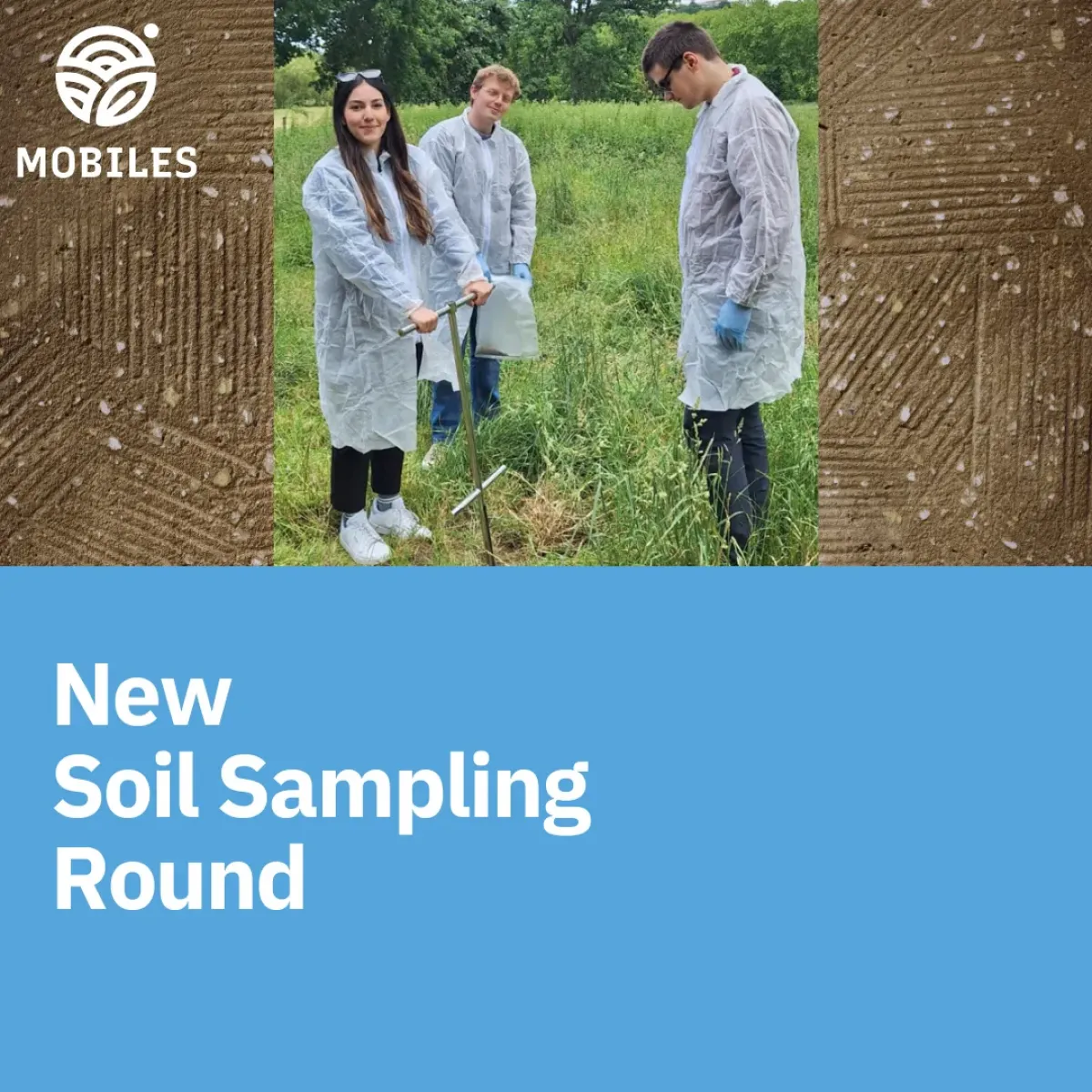
MOBILES continues its European soil campaign across all study sites in Europe. After documenting the autumn sampling, partners have returned to the field this spring to collect new samples from the six countries participating in the project: Poland, France (Fig. 1), Italy (Fig. 2), Germany, Greece, and Cyprus
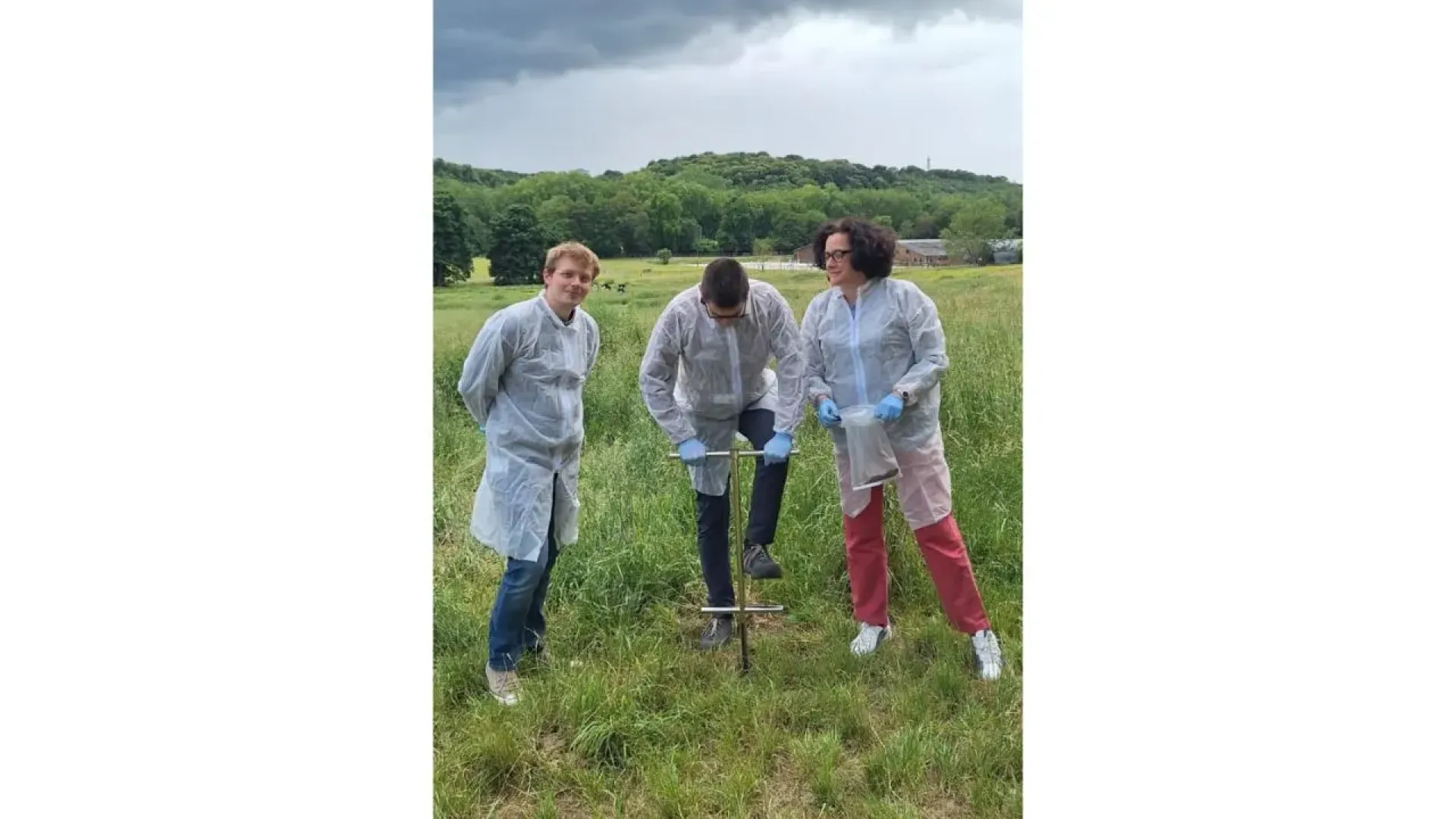
Fig.1: Soil sample collection in France
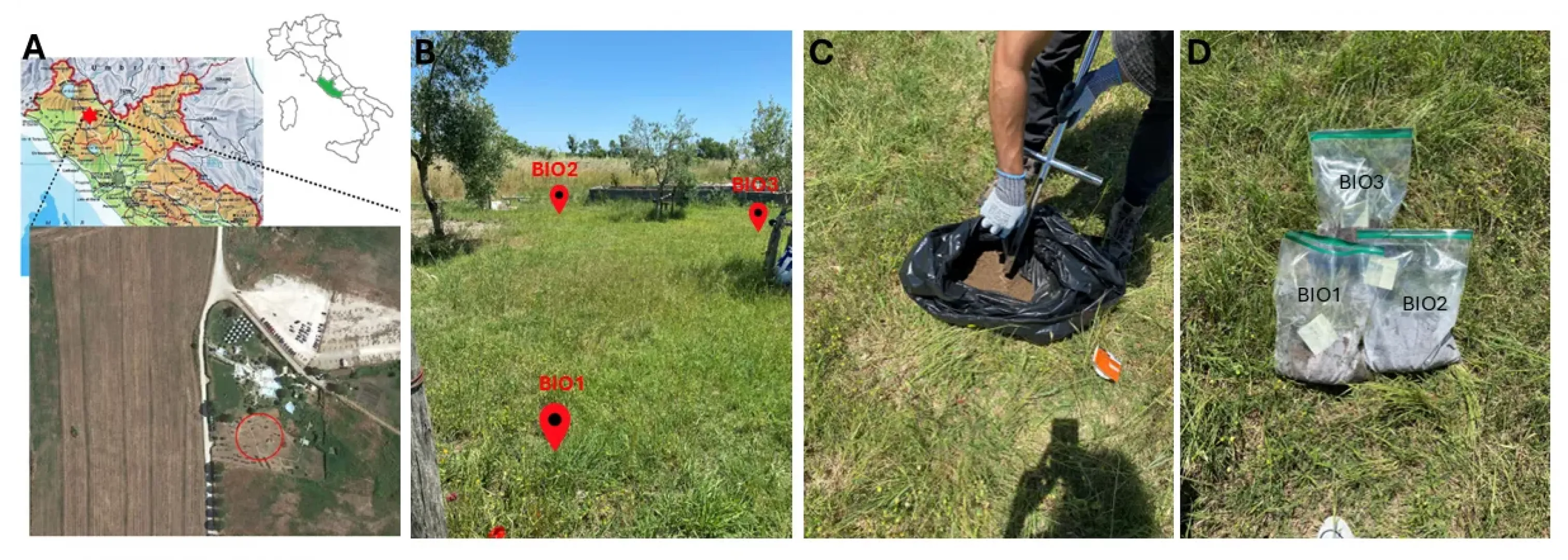
Fig.2: Bagnaccio study site (Viterbo, Central Italy) and soil sampling procedure. (A) Location of the study area. (B) Field sampling plots (red markers). (C) Representative soil core collected for characterization. (D) Soil samples used for physicochemical and biological analyses.
This repeated sampling is essential for building a reliable European dataset. By collecting soils in different seasons and under varying environmental conditions, MOBILES can better understand how microbial communities respond to emerging contaminants over time.
MOBILES is gathering soils from diverse environments affected by different contamination sources, including hormones, pesticides and antibiotics, heavy and semi‑metals, and microplastics. Sampling in different seasons allows researchers to capture natural fluctuations in microbial life and to identify stable microbial signatures linked to specific pollutants.
All samples are collected following a harmonized protocol and transported under conditions that preserve RNA integrity, ensuring that downstream analyses reflect the true biological state of each site. After laboratory processing, the DNA/RNA sequencing outputs will be analysed through the MOBILES bioinformatic pipeline and incorporated into the project’s dataset.
As the project advances, this coordinated fieldwork continues to deepens our understanding of how soil microbiomes reflect Europe’s emerging contamination patterns.