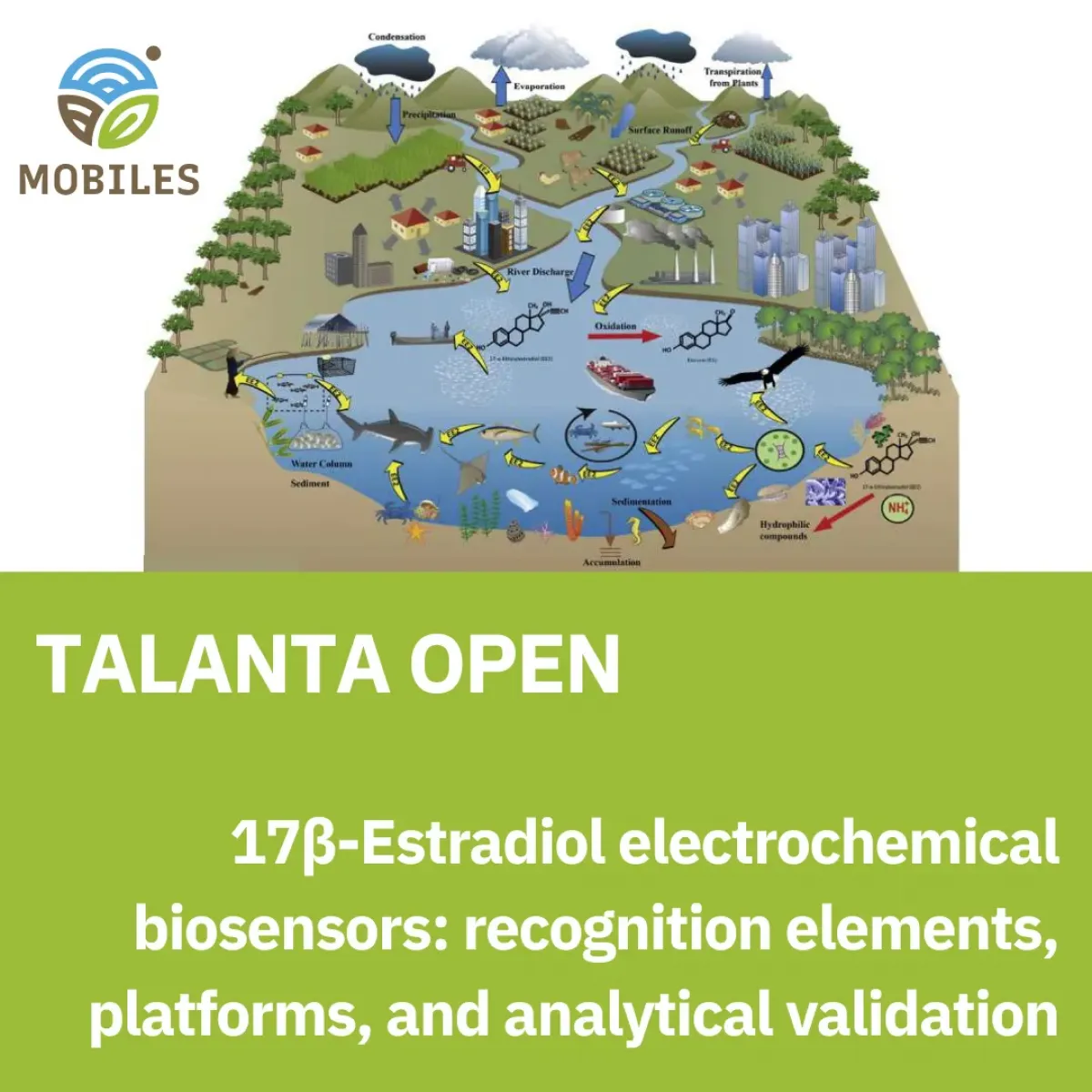
The MOBILES consortium has a new scientific publication. The publication provides a comprehensive review of electrochemical biosensing strategies for detecting 17β‑estradiol (E2), one of the most potent endocrine‑disrupting compounds (EDCs) found in aquatic environments. E2 is also classified as a priority substance within the category of Contaminants of Emerging Concern (CECs), subject to stringent regulatory oversight.
E2 is a natural hormone, but in the environment, it becomes a powerful endocrine disruptor. As the publication highlights, E2 is a potent endocrine‑disrupting compound whose presence in water can cause adverse effects even in trace amounts. Concentrations as low as 0.2–10 ng/l have been linked to:
These effects are well documented in the literature and underscore why E2 is considered a priority substance in European water policy.
Despite its importance, E2 remains difficult to monitor routinely. Conventional laboratory methods offer excellent sensitivity but are costly, slow, and not suited for widespread field deployment. This review emphasizes that ultrahigh sensitivity down to the pg/mL range is required for environmental and clinical relevance, yet current approaches often struggle with complex sample matrices, low‑effect thresholds, incomplete removal in wastewater treatment and transformation products that regenerate active E2. This is the gap MOBILES aims to fill.
Understanding and monitoring E2 in water is not only a scientific challenge, but also a public and policy priority. Across Europe, E2 continues to appear in surface waters at concentrations known to affect wildlife, from disrupting reproductive cycles to altering population dynamics. These are not abstract risks; they are measurable ecological pressures that call for better tools and more frequent monitoring.
For people, the stakes are equally tangible. Natural and synthetic estrogens are linked in the literature to reproductive and developmental effects, and ensuring that water resources remain safe requires the ability to detect these compounds at extremely low levels. Sensitive, reliable measurement is therefore a cornerstone of both environmental protection and public‑health assurance.
Regulators have already recognized the urgency. Under the EU Water Framework Directive, E2 is listed as a priority substance, meaning Member States must track its presence and assess compliance with environmental quality standards. The work carried out within MOBILES directly supports this regulatory landscape by advancing technologies capable of meeting these demanding requirements. This new publication strengthens the evidence base, clarifies analytical needs, and supports the development of next‑generation mobile sensors capable of detecting E2 and other EDCs where it matters most: directly in the field, in real time, and at environmentally relevant concentrations.
As MOBILES continues to advance its technological solutions, contributions like this ensure that our innovations are grounded in rigorous science and aligned with the needs of regulators, water managers, and society.
17β-Estradiol electrochemical biosensors: recognition elements, platforms, and analytical validation
Authors: Antonios Georgas, Theodoros Pouris, Melina Giannaki, Angelo Ferraro, Evangelos Hristoforou
Full publication here