Rapid and reliable bacterial detection has become a strategic priority across healthcare, food safety and environmental monitoring. The increasing burden of foodborne diseases, antimicrobial resistance and emerging environmental risks calls for analytical methods capable of delivering accurate results within operationally relevant timeframes. However, conventional microbiological culture and PCR-based methods often remain constrained by laboratory infrastructure, specialised personnel and lengthy analytical workflows.
Addressing this challenge, researchers from INRAE have published a comprehensive review providing an in-depth analysis of the technologies that are transforming molecular diagnostics by enabling rapid, highly sensitive and increasingly portable detection of bacterial pathogens.
The review systematically examines the current landscape of isothermal nucleic acid amplification technologies, including Loop-mediated Isothermal Amplification (LAMP), Recombinase Polymerase Amplification (RPA), Rolling Circle Amplification (RCA), Strand Displacement Amplification (SDA), Helicase-dependent Amplification (HDA) and Nucleic Acid Sequence-Based Amplification (NASBA). Each method is evaluated in terms of its amplification mechanism, analytical performance, practical advantages and current limitations, providing researchers with a comprehensive framework for selecting appropriate technologies across different application domains. Beyond comparing individual amplification strategies, the review highlights one of the most significant developments in molecular diagnostics: the convergence of isothermal amplification with complementary technologies such as CRISPR/Cas systems, microfluidics and advanced biosensors. These integrated platforms combine highly efficient nucleic acid amplification with sensitive signal transduction methods, opening new possibilities for portable, automated and field-deployable analytical devices.
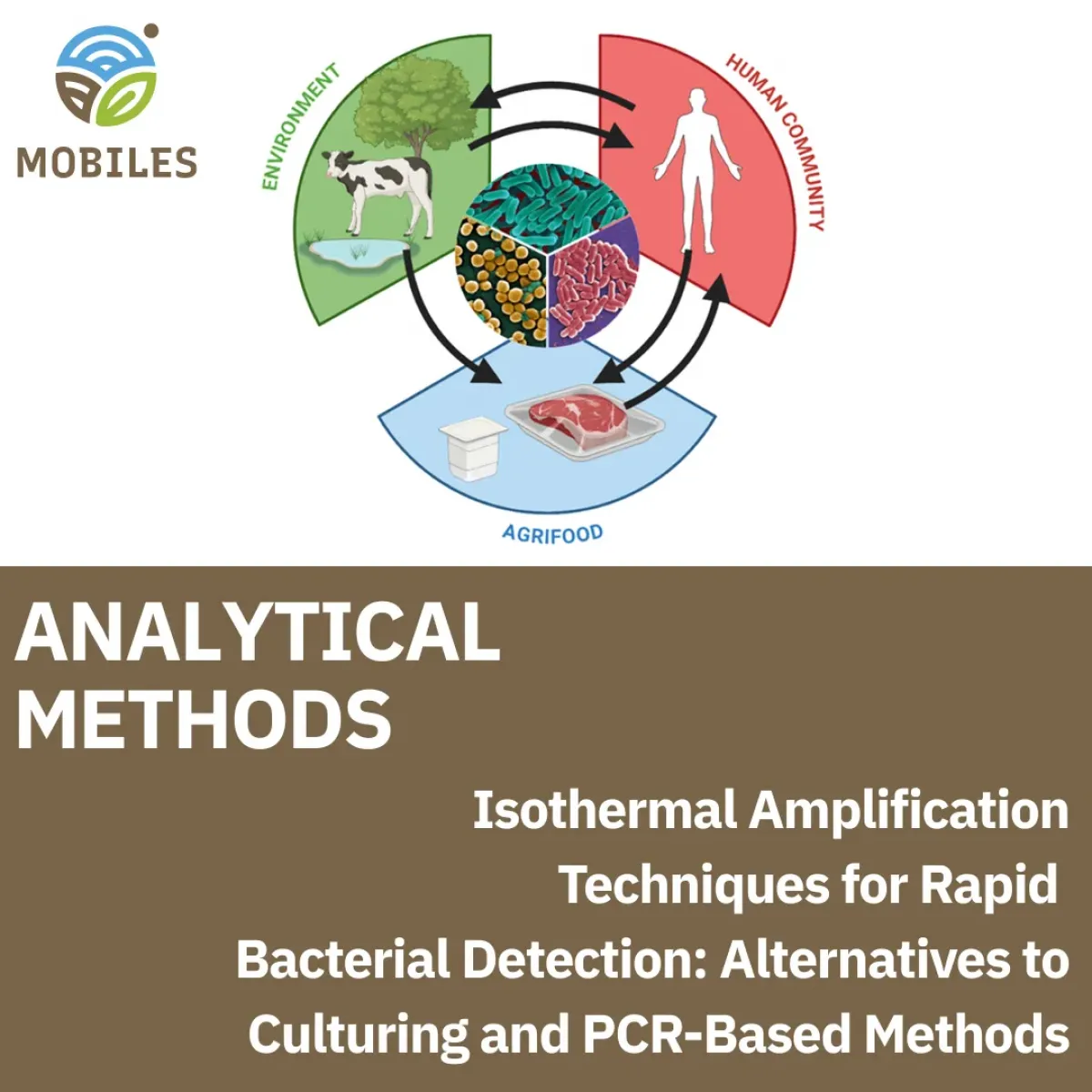
This technological evolution has implications that extend well beyond analytical chemistry. Earlier identification of bacterial contamination enables earlier intervention, supporting evidence-based decisions in clinical diagnostics, food production, water quality management and environmental protection. The review therefore frames rapid molecular diagnostics within the broader One Health perspective, recognising that effective monitoring of bacterial pathogens contributes simultaneously to safeguarding human, animal and environmental health.
The review also reflects the broader scientific vision underpinning the MOBILES project: advancing biosensing technologies that deliver reliable information faster, closer to the point of need and across diverse environmental settings. By outlining the opportunities and remaining challenges of isothermal amplification technologies, the review contributes to the scientific foundation needed to accelerate this transition.
Isothermal Amplification Techniques for Rapid Bacterial Detection: Alternatives to Culturing and PCR-Based Methods
Authors: Léo Baldenweck, Noémie Berg, Mila Djisalov, Vitaly Efremov, Zorica Novakovic, Sandrine Auger, Jasmina Vidic
Full publication here